Revolución en Medicina con Sello Español: Desenmascarado un Nuevo Culpable del Infarto.
La pelea contra la aterosclerosis, enfermedad que obstruye nuestras arterias y que causa, a la larga, millones de muertes, se ha centrado durante décadas en el colesterol: he aquí el primer culpable. Pero muchos infartos han sido observados en personas con niveles normales de colesterol, lo que ha sido un misterio durante años que ha mantenido en vilo a la cardiología, y que acaba de ser probablemente desvelado.
Ahora, gracias a una gigantesca investigación liderada desde España, se ha ido encontrando un nuevo culpable y, ante él, también una nueva posibilidad de esperanza.
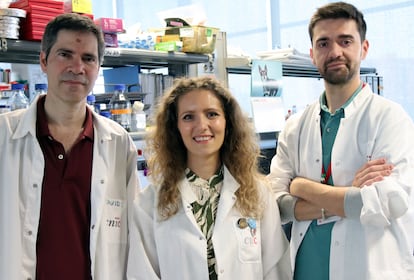
Imaginad que la aterosclerosis es como un crimen en serie que va lesionando nuestras "tuberías" arteriales. Hasta ahora, el principal sospechoso era el colesterol, pero un brillante equipo de investigadores liderado por David Sancho, los farmacólogos Annalaura Mastrangelo e Iñaki Robles, del Centro Nacional de Investigaciones Cardiovasculares (CNIC, Madrid), y una eminencia como Valentín Fuster, sospechaba que había otro culpable en este enigma.
Un "chivato" en nuestra sangre. Los autores realizaron un análisis sobre los datos de miles de voluntarios sanos, incluyendo los del macroestudio español PESA (CNIC-Banco Santander) y descubrieron un "chivato". La existencia de una molécula a la que llamaron propionato de imidazol (ImP), que no producimos nosotros, sino las bacterias de nuestro intestino, estaba presente en cantidades notablemente más altas en personas que, sin saberlo, ya tenían aterosclerosis en sus arterias. Y lo más llamativo, esta molécula es un indicador de riesgo independiente del colesterol.
La Prueba Irrefutable: De Cómplice a Culpable Para demostrar que el ImP era el autor material del "crimen", el equipo del CNIC realizó un experimento clave. A ratones sanos con una dieta perfecta, sin un gramo de colesterol extra, les administraron únicamente ImP. El resultado fue inequívoco: los ratones desarrollaron aterosclerosis. Era la prueba definitiva: el ImP puede iniciar la enfermedad por sí solo, inaugurando una vía completamente nueva y desconocida hasta ahora.
El Modus Operandi: La Llave Maestra que Activa la Inflamación. ¿Cómo lo hace? El ImP es una llave maestra que encaja en una cerradura específica de nuestras células inmunitarias: el receptor I1R. Al girar la llave, se activa una alarma interna (la vía mTOR) que provoca que estas células inmunitarias, en lugar de proteger, desaten una respuesta inflamatoria descontrolada dentro de la pared de la arteria, formando así la placa de aterosclerosis.
Una Colaboración Internacional para Desarmar al Culpable. Conociendo el mecanismo, el siguiente paso fue desarmarlo. Este avance no fue obra de un solo equipo; es el resultado de una gran colaboración internacional con expertos de Suecia, Alemania y EE. UU., coordinada magistralmente desde el CNIC.
Probaron un fármaco capaz de "taponar la cerradura" (el receptor I1R). Los resultados fueron espectaculares: no solo previno que el ImP causara la enfermedad, sino que logró frenar su progresión en ratones que ya la padecían por una dieta rica en grasas.
Un Futuro con Doble Esperanza: Diagnóstico y Tratamiento. Este descubrimiento, liderado desde España, representa una revolución y abre dos caminos llenos de esperanza: 1) Un nuevo chivato para el diagnóstico precoz: medir el ImP en un simple análisis de sangre podría identificar a miles de personas con riesgo cardiovascular oculto. 2) Una nueva generación de fármacos: Se abre la puerta a crear tratamientos que, en lugar de actuar sobre el colesterol, bloqueen esta nueva vía inflamatoria, ofreciendo una alternativa vital para pacientes que no responden a las terapias actuales.
Como proponen los propios autores, la terapia del futuro podría ser una combinación sinérgica: seguir usando las estatinas para controlar al "culpable A" (colesterol) y añadir un nuevo fármaco para bloquear la vía del "culpable B" (ImP), atacando así la enfermedad por dos frentes a la vez.
https://x.com/PabloFuente/status/1945842108356522423
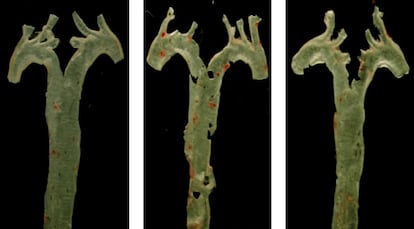
Extended Data Fig. 8: Inhibition of the ImP/I1R axis with AGN192403 prevents HC-induced atherosclerosis without affecting circulating ImP and cholesterol concentration.
ApoE−/− mice were fed a chow diet or high cholesterol (HC) diet for 8 weeks. At 4 weeks post-diet initiation, AGN192403 was administered (AGN) or not in the drinking water to mice fed HC diet until week 8, followed by sacrifice and analysis. a, Oil red O en face staining of the aorta in male mice showing quantification of atherosclerotic lesions in the whole aorta. Chow=15; HC = 14; HC + AGN = 13. b, ImP concentration in plasma of male mice at sacrifice. Chow=10; HC = 14; HC + AGN = 13. c, Oil red O en face staining of the aorta in female mice showing quantification of atherosclerotic lesion in the whole aorta (left), aortic arch (middle) and representative images (right). Chow=8; HC = 15; HC + AGN = 18. d, Caspase 3 staining of aortic roots. Quantification of caspase-3+ (left) and representative images of caspase-3 staining (right). Bar size= 500 µm. Chow=12; HC = 13; HC + AGN = 14. e, Total cholesterol concentration in plasma in male (left), n = 15, and female mice (right), Chow=7; HC = 14; HC + AGN = 17, at sacrifice. a-e, Arithmetic mean ± SEM and individual data from at least two pooled independent experiments. One-way ANOVA with Tukey post-hoc correction.
https://www.nature.com/articles/s41586-025-09263-w/figures/12
Revolution in medicine: A molecule produced by gut bacteria causes atherosclerosis, responsible for millions of deaths
The discovery, made thanks to an experiment involving hundreds of bank employees in Spain, opens the door to new treatments beyond reducing cholesterol
A team of Spanish scientists made a striking announcement 15 years ago: they were seeking thousands of volunteers among the employees of Banco Santander in Madrid: researchers wanted to study them in depth for decades, in order to understand the onset of cardiovascular disease in healthy people. The results are even more surprising. Researchers have discovered that gut bacteria produce a molecule that not only induces but also causes atherosclerosis, the accumulation of fat and cholesterol in the arteries that can lead to heart attacks and strokes. This unexpected link between microbes and cardiovascular disease — the leading cause of death in humanity — is a paradigm shift. The work was published Wednesday in the journal Nature, a showcase for the world’s best science.
The in-depth study of Santander employees using advanced medical imaging equipment soon revealed another shocking finding: atherosclerosis was ubiquitous. The volunteers were apparently healthy, aged between 40 and 55, but 63% of the participants showed signs of the disease. The new results show that some gut bacteria, in certain states, produce imidazole propionate, a simple molecule with six carbon atoms, eight hydrogen atoms, two nitrogen atoms, and two oxygen atoms (C₆H₈N₂O₂). This compound enters the blood, interacts with immature white blood cells, and triggers an inflammatory reaction in the arteries, which promotes the buildup of fatty plaques.
"El propionato de imidazol induce la aterosclerosis por sí solo. Hay una relación causal ", asegura el biólogo David Sancho, de 53 años, líder del nuevo estudio en el Centro Nacional de Investigaciones Cardiovasculares (CNIC) en Madrid. Su equipo administró la molécula a ratones, que desarrollaron la enfermedad
. Además, los científicos observaron niveles elevados de propionato de imidazol en uno de cada cinco voluntarios con aterosclerosis activa , el tipo en el que las placas grasas son más propensas a
romperse y formar los coágulos sanguíneos que causan infartos de miocardio y accidentes cerebrovasculares.
Los nuevos resultados demuestran que la aterosclerosis no es sólo una enfermedad causada por la grasa, sino que también tiene un componente inflamatorio y autoinmune, según Sancho.
The good news is that if C₆H₈N₂O₂ causes the problem in a significant percentage of patients, steps can be taken to prevent it. Researchers have identified the receptor to which the molecule binds and have managed to block it with a drug, reducing the progression of atherosclerosis in mice fed a high-cholesterol diet. “With this inhibitor, we completely prevented the development of the disease,” says Sancho, who has patented the experimental treatment with other co-authors, such as the Italian pharmacologist Annalaura Mastrangelo, their colleague Iñaki Robles, and the cardiologist Valentín Fuster, director general of the CNIC in Madrid and president of the Mount Sinai Fuster Heart Hospital in New York, which has borne his name for two years.
Another of the study’s authors, the Swedish biologist Fredrik Bäckhed, had already discovered in 2018 that imidazole propionate levels were higher in people with type 2 diabetes. And just three months ago, independent research led by the cardiologist Arash Haghikia advanced the link between the bacterial molecule and atherosclerosis. “The fact that two different groups came to the same conclusion strengthens our confidence that this is a significant and relevant discovery,” argues Haghikia, of Ruhr University Bochum (Germany). “What is particularly striking is that imidazole propionate appears to promote atherosclerosis even when cholesterol levels are normal. This could help explain why some people develop heart disease despite having few or no traditional risk factors, such as high cholesterol or high blood pressure,” he emphasizes.
Cardiovascular diseases kill 18 million people each year. Banco Santander’s chairman, Emilio Botín, died of a heart attack four years after signing off on the project, which has allowed for the analysis of more than 4,000 volunteer workers, 400 of whom are included in this new study. The research, conducted using expensive and complex techniques such as computed axial tomography (CAT) and positron emission tomography (PET), has made it possible to detect high levels of imidazole propionate in the very early stages of atherosclerosis, which could greatly facilitate diagnosis at that invisible stage when a person is unknowingly at risk.
Sancho and his colleagues acknowledge that further research will be needed to identify the specific strains of bacteria capable of producing the molecule, but they point to “changes in intestinal microbial ecology” following dietary modifications, with an increase in bacterial genera such as Escherichia, Shigella, and Eubacterium. When Fuster presented the project in 2010, he noted how difficult it is to diagnose cardiovascular problems early and how simple it is to prevent them, with measures such as exercising, following a healthy diet, and not smoking. The new study shows that blood levels of imidazole propionate are lower in people with diets rich in vegetables, fruits, whole grains, fish, tea, and low-fat dairy products.
The Argentine microbiologist Federico Rey and Indian pathologist Vaibhav Vemuganti applaud the “exciting opportunities” that the new study opens for the prevention and treatment of cardiovascular disease. In a commentary also published Wednesday in Nature, the two experts emphasize that exposure to imidazole propionate worsens plaque formation in the arteries of mice. “This effect occurs independently of changes in cholesterol levels, a surprising result given the central role of cholesterol in the development of atherosclerosis,” note the two specialists, from the University of Wisconsin-Madison. “This discovery offers an interesting clue about a possible new factor involved in the origin of atherosclerosis. This is very relevant because, although lowering cholesterol — through drugs called statins, for example — can effectively reduce the risk of cardiovascular disease, a considerable proportion of people still experience adverse cardiovascular events, such as myocardial infarctions or strokes,” they warn. The CNIC itself said in a statement that the new study “could revolutionize” the diagnosis and treatment of atherosclerosis.
Sancho stresses that the work has been made possible thanks to the collaboration of thousands of volunteer employees of Banco Santander in Madrid, but also thanks to grants of €1 million from the “la Caixa” Foundation, €150,000 from the European Research Council and €100,000 from the State Research Agency.
The discovery of the decisive effect of imidazole propionate on atherosclerosis takes place against a backdrop in which the scientific community is revealing the unknown role of intestinal microbes in some human diseases. The biotechnologist Cayetano Pleguezuelos and his colleagues at the Hubrecht Institute (The Netherlands) demonstrated in February 2020 that a strain of the bacterium Escherichia coli produces a toxic molecule, called colibactin, which damages the DNA of human cells and causes malignant tumors.
Cases of colorectal cancer are skyrocketing in people under the age of 50, due to unknown causes, doubling in many countries in the last two decades. Another study, led by computational biologist Marcos Díaz Gay, suggested just three months ago that behind this colorectal cancer epidemic is the Escherichia coli toxin. “In young patients, up to 39 years of age, we see that colibactin pattern in one out of every three cases,” stressed Díaz Gay, of the National Cancer Research Center.
https://english.elpais.com/health/2025-07-17/revolution-in-medicine-a-molecule-produced-by-gut-bacteria-causes-atherosclerosis-responsible-for-millions-of-deaths.html
https://www.infobae.com/america/agencias/2025/07/16/hallan-un-metabolito-de-la-microbiota-intestinal-asociado-al-desarrollo-de-aterosclerosis/
https://efe.com/ciencia-y-tecnologia/2025-07-16/molecula-bacterias-intestinales-aterosclerosis-cnic/
La aterosclerosis es una enfermedad común que aparece cuando una sustancia pegajosa llamada placa se acumula en las
. Las enfermedades relacionadas con la aterosclerosis son la principal causa de muerte en los Estados Unidos y el mundo entero.
La aterosclerosis no es lo mismo que la arteriosclerosis, que se refiere al “endurecimiento de las arterias” y significa que estas se engrosan y pierden flexibilidad.
https://www.nhlbi.nih.gov/es/salud/aterosclerosis


No hay comentarios:
Publicar un comentario